

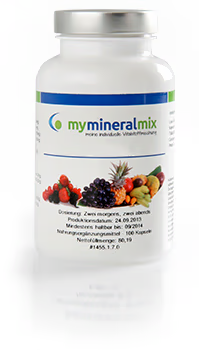


MyMeno Hitze wurde von einem erfahrenen Ärzteteam extra genau für Sie zusammengestellt.
Haben Sie auch Hitzewallungen und Schweißausbrüche zu den unpassendsten Momenten, die Ihnen die Konzentration mindern und Sie in unpässliche Situationen bringen?
Fast alle Frauen mit Wechseljahrsbeschwerden leiden unter Schweißausbrüchen und Hitzewallungen. MyMeno Hitze wurde von einem erfahrenen Ärzteteam extra genau für Ihre Beschwerden zusammengestellt.
Es mindert das ständige Schwitzen und wenn es dazu kommt, ist es weniger ausgeprägt.
Die Kombination aus Vitaminen, Mineralien und wirksamen Heilpflanzen ist optimal auf die Ihrer Wechseljahrsbeschwerden, hier mit dem Schwerpunkt Schwitzen, abgestimmt. In MyMeno Hitze kommen die Heilwirkung von Salbei, Rotklee, Ginseng, Yams und vielen anderen wertvollen Inhaltsstoffen zu ihrer besten Wirkung zusammen.
Die neue Kombination von chinesischen und heimischen Heilpflanzen bringt Sie wieder ins Gleichgewicht.
mit Pflanzenextrakten aus Yams, Ginseng, Salbei, Johanniskraut und Traubensilberkerze, dem Vitamin D und dem Mineralstoff Magnesium zur unterstützenden Versorung der Frau in den Wechseljahren. Vitamin D und Magnesium als Beitrag zur Erhaltung normaler Knochen.
Magnesiumcitrat, Yamswurzel-Extrakt (18% Diosgenin), Hydroxypropylmethylcellulose (Kapselhülle), Salbei-Extrakt, Ginsengwurzel-Extrakt, Johanniskraut-Extrakt, Traubensilberkerzen-Wurzel Extrakt, Cholecalciferol
Wenn Frauen in die Wechseljahre kommen, können sie mit verschiedenen körperlichen und emotionalen Herausforderungen konfrontiert werden. Eine der häufigsten Symptome sind Hitzewallungen und Schwitzen, die bei vielen Frauen auftreten. In diesem Artikel werden wir uns mit den Ursachen, Symptomen, Behandlungsmöglichkeiten und vorbeugenden Maßnahmen befassen, die Frauen ergreifen können, um mit diesen Herausforderungen umzugehen.
Hitzewallungen sind ein plötzliches und intensives Gefühl von Wärme, das sich oft im oberen Teil des Körpers ausbreitet und von Schweißausbrüchen begleitet wird. Sie können mehrere Male am Tag auftreten und manchmal bis zu 10 Minuten oder länger dauern. Schwitzen ist ein häufiges Symptom, das mit Hitzewallungen einhergeht. Es kann auch nachts auftreten und als nächtliche Schweißausbrüche bezeichnet werden.
Hitzewallungen und Schwitzen sind Symptome des sinkenden Hormonspiegels, insbesondere des Östrogenspiegels, während der Wechseljahre. Diese hormonellen Veränderungen können das Wärmezentrum im Gehirn stören und dazu führen, dass es falsche Signale an den Körper sendet, um überschüssige Wärme abzugeben.
Neben den hormonellen Veränderungen in den Wechseljahren können auch andere Faktoren zu Hitzewallungen und Schwitzen führen, wie zum Beispiel:
Die Symptome von Hitzewallungen und Schwitzen können bei verschiedenen Frauen unterschiedlich ausgeprägt sein. Einige Frauen haben leichte Hitzewallungen und Schwitzen, während andere sehr starke Symptome haben können, die ihr tägliches Leben beeinträchtigen können. Zu den häufigsten Symptomen gehören:
Es gibt verschiedene Behandlungsmöglichkeiten für Hitzewallungen und Schwitzen, einschließlich:
Die Hormonersatztherapie ist eine der effektivsten Behandlungsmöglichkeiten für Hitzewallungen und Schwitzen. Sie umfasst die Einnahme von Östrogen und Progesteron, um den Hormonspiegel auszugleichen und die Symptome zu lindern.
Es gibt jedoch einige Risiken und Nebenwirkungen im Zusammenhang mit HRT, die Frauen berücksichtigen sollten, bevor sie sich für diese Option entscheiden. Es ist wichtig, mit einem Arzt zu sprechen, um das richtige Behandlungsschema und die beste Option für jede Frau individuell zu finden.
Es gibt auch nicht-hormonelle Behandlungsmöglichkeiten für Hitzewallungen und Schwitzen, einschließlich:
Veränderungen des Lebensstils können auch dazu beitragen, Hitzewallungen und Schwitzen zu reduzieren. Hier sind einige Tipps:
Es gibt einige Schritte, die Frauen ergreifen können, um Hitzewallungen und Schwitzen während der Wechseljahre zu verhindern oder zu reduzieren. Hier sind einige Tipps:
Hitzewallungen und Schwitzen sind Symptome, die viele Frauen während der Wechseljahre erleben. Es gibt verschiedene Behandlungsmöglichkeiten, von Hormonersatztherapie bis hin zu nicht-hormonellen Optionen und Veränderungen des Lebensstils. Es ist wichtig, mit einem Arzt zu sprechen, um die beste Option für jede Frau individuell zu finden. Durch Veränderungen des Lebensstils und vorbeugende Maßnahmen können Frauen auch dazu beitragen, Hitzewallungen und Schwitzen zu reduzieren.
Was sind Hitzewallungen? Hitzewallungen sind ein plötzliches und intensives Gefühl von Wärme, das sich oft im oberen Teil des Körpers ausbreitet und von Schweißausbrüchen begleitet wird.
Wie lange dauern Hitzewallungen? Hitzewallungen können mehrere Male am Tag auftreten und manchmal bis zu 10 Minuten dauern.
Was sind die häufigsten Ursachen von Hitzewallungen? Hitzewallungen treten am häufigsten während der Wechseljahre auf, können aber auch durch bestimmte Medikamente, Krebsbehandlungen oder Schilddrüsenprobleme verursacht werden.
Kann ich Hitzewallungen verhindern? Es gibt einige Schritte, die Frauen ergreifen können, um Hitzewallungen zu verhindern oder zu reduzieren, wie eine ausgewogene Ernährung, regelmäßige Bewegung und Vermeidung von scharfen Speisen, Alkohol, Koffein und Tabak.
Unser Nährstofflexikon hilft, alle Fragen zu Lebensmitteln, Nährstoffen und deren wissenschaftlich belegten, gesundheitlichem Einfluss zu klären.
Mit diesem Wissen können Sie gut Informiert Ihr Nahrungsergänzungsmittel kaufen.
individuelle Nahrungsergänzung, Nahrungsergänzungsmittel mischen lassen, individuelle Nahrungsergänzungsmittel, Nahrungsergänzungsmittel selbst zusammenstellen, Nahrungsergänzungsmittel selber zusammenstellen, Nahrungsergänzungsmittel individuell, personalisierte, vitamine, nahrungsergänzung, supplements, personalisiert, Nahrungsergänzungsmittel, zusammenstellen, individuell, individuelle, mix, vitamin, selbst, Mineralien, zum Einnehmen, kaufen, individualisiert, individualisierte, Aminosäuren, Erfahrungen, Nährstoff, Mischung
Data sheet
MyMeno Hitze wurde von einem erfahrenen Ärzteteam extra genau für Sie zusammengestellt.